Social Rejection and Risk-Taking in Ingroup and Outgroup Situations
Social Rejection and Risk-Taking in Ingroup and Outgroup Situations
A behavioral study examining how social rejection influences risk-taking behavior across varying levels of rejection clarity and group identity.
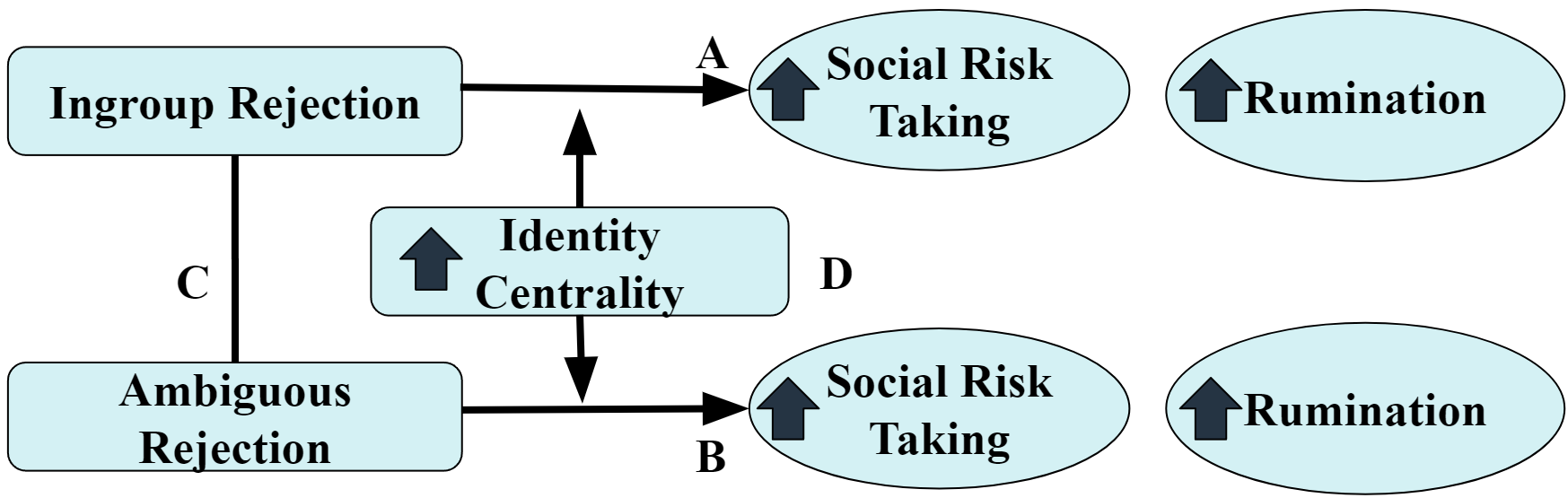
This project investigates how experiences of social rejection influence individuals’ willingness to engage in risk-taking behavior. In particular, it examines how features of social experiences, including rejection clarity, explicit versus ambiguous, and group membership, ingroup versus outgroup, shape behavioral responses.
The study employed a 2 × 2 between-subjects experimental design to examine how different social rejection contexts influence behavior and affect.
- Group status was manipulated as ingroup versus outgroup.
- Rejection clarity was manipulated as ambiguous versus explicit.
- Social rejection was modeled using a modified Cyberball paradigm, an online ball-tossing game commonly used to study social exclusion.
- Participants then completed a behavioral social risk-taking task and self-report measures assessing rumination, self-esteem, and negative affect.
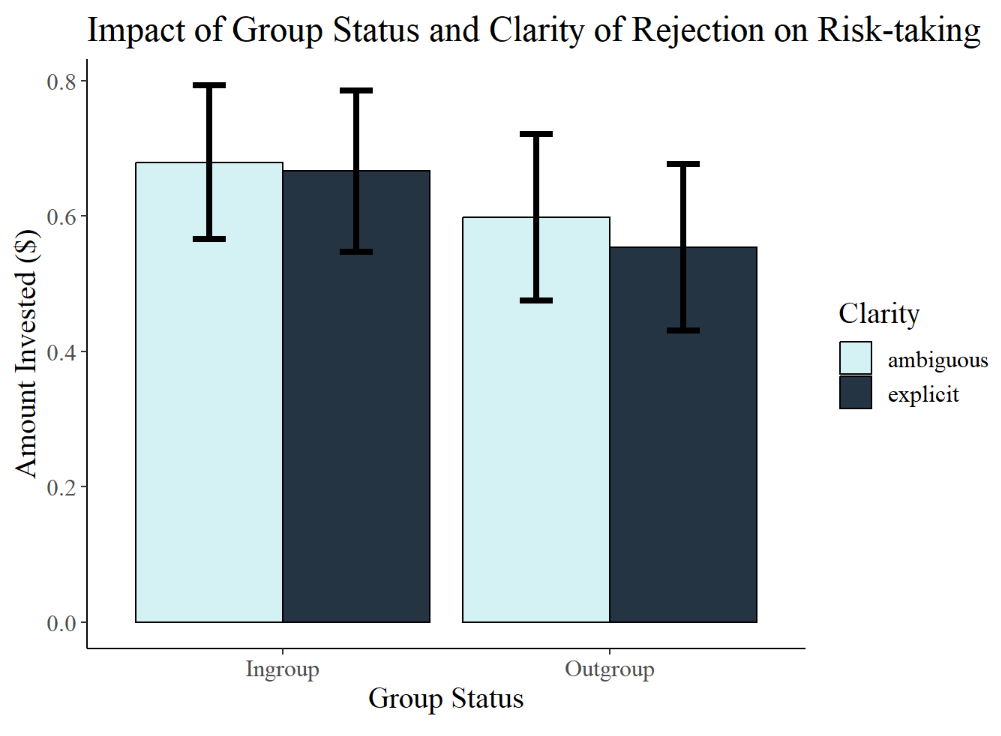
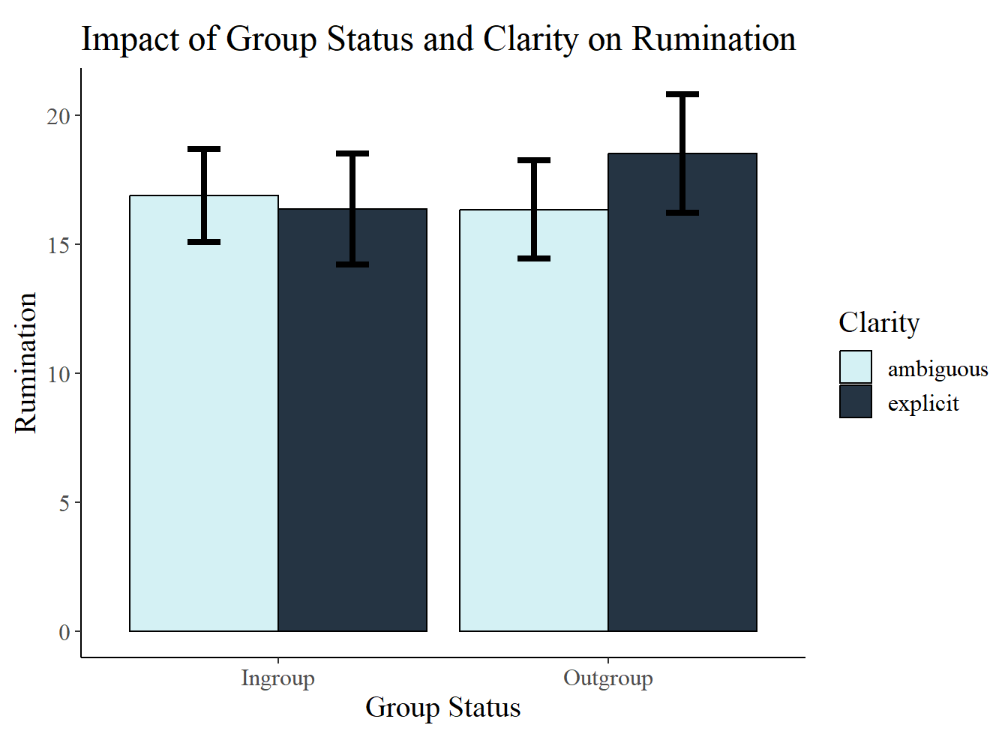
 Key Findings
The experimental manipulation was successful, with participants in the explicit condition reporting significantly higher perceived rejection than those in the ambiguous condition.
While rejection clarity strongly shaped participants’ perception of exclusion, it did not translate into significant differences in social risk-taking or rumination.
Rejection from ingroup versus outgroup members did not produce significant differences in social risk-taking or rumination, indicating that group membership alone was not a strong driver of behavioral response in this study.
A marginal effect suggested that individuals with moderate identity centrality may be more psychologically responsive, particularly in terms of rumination, when experiencing ambiguous rejection from ingroup members.
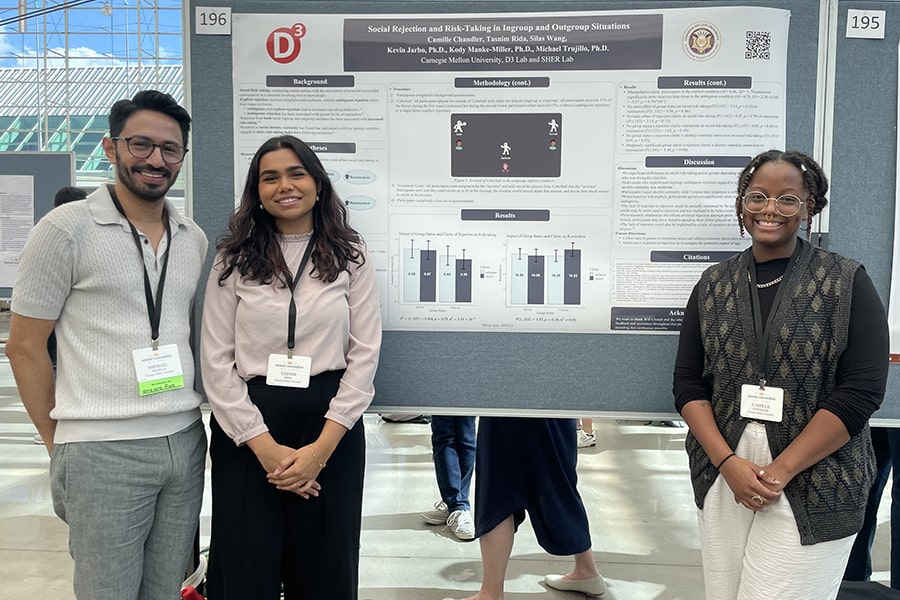
This research was conducted as part of Dr. Michael Trujillo’s Stigma, Health Equity, and Resilience Lab at Carnegie Mellon University. Findings were presented at the Society for Personality and Social Psychology 2024 Annual Convention and selected as the winning poster for CMU Psychology Department’s Meeting of the Minds 2024.